Desert Rarities: 8 Extraordinary Animals Found Only in Rajasthan’s Thar
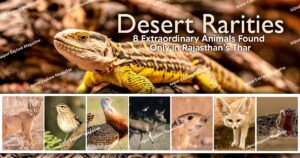
Rajasthan’s Thar Desert isn’t just dunes and dunes—it harbours some of India’s most remarkable desert-adapted wildlife. These species have evolved to survive extreme heat, scarce water, and sandy landscapes. Below are eight rare animals that are special to Rajasthan’s deserts, along with what makes them so fascinating, where to spot them, and why conservation matters.
1. Great Indian Bustard (Ardeotis nigriceps)
-
What is it? One of the heaviest flying birds in India, with an impressive wingspan and distinct courtship displays.
-
Adaptations: Ground-dwelling, camouflaged plumage, capable of surviving long periods without water.
-
Where to find: Primarily in the Desert National Park and other semi-arid grasslands of western Rajasthan. Conservation areas are vital.
-
Threats & Conservation: Habitat loss, hunting, disturbances by humans and livestock. It is critically endangered, making protection of its remaining habitat urgent.
2. Indian Spiny-tailed Lizard (Saara hardwickii)
-
What is it? A fossil-looking reptile with stout body and thick, spiny tail. Also known as “kadaura”.
-
Adaptations: Burrows to escape heat, herbivorous diet of tough desert vegetation. The spiny tail helps in defence and water retention.
-
Where to find: Sandy terrain and stabilized dunes in Thar and adjoining arid zones.
3. Chinkara / Indian Gazelle (Gazella bennettii)
-
What is it? A slender, elegant gazelle with light build and graceful limbs.
-
Adaptations: Can survive long periods without direct water, gets moisture from food. Agile and fast, uses speed to evade predators.
-
Where to find: Scrublands, open desert-edges. Best sightings at dawn or dusk.
4. Desert Fox (Vulpes vulpes pusilla)
-
What is it? Also known as the Indian desert fox, smaller than its more familiar red fox cousins. Large ears being its distinctive feature.
-
Adaptations: Large ears help dissipate heat; nocturnal habits help avoid daytime extremes; burrows or uses crevices for shelter.
-
Where to find: Rocky areas, sandy plains; around scrub vegetation where prey such as insects and small rodents live.
5. Desert Jird (Meriones hurrianae)
-
What is it? A small rodent, similar to a mouse but adapted to arid conditions.
-
Adaptations: Lives in complex burrows to escape heat; active mostly at night or cooler times; eats seeds, plants, insects.
-
Where to find: Loose soil along dunes, sand flats, scrubland with some vegetation to provide cover.
6. Caracal (Caracal caracal)
-
What is it? A mid-sized wild cat noted for tufted ears, powerful build, and incredible leaping ability.
-
Adaptations: Excellent hunter; stealthy, capable of taking birds mid-flight; adapts to scarcity of prey and water.
-
Where to find: Very elusive; semi-arid scrublands, often remote or protected zones where human disturbance is low.
7. Saw-Scaled Viper (Echis carinatus)
-
What is it? A small but dangerously venomous snake. Known for its aggressive behaviour when threatened and its distinct “saw-rubbing” hiss.
-
Adaptations: Camouflaged scales, ability to lie in wait in rubble, stones; survives with low food intake.
-
Where to find: Loose stones, under rocks, areas of scattered debris; usually nocturnal or active in cooler parts of day.
8. White-browed Bush Chat (Saxicola macrorhynchus)
-
What is it? A striking small bird with distinctive white eyebrow markings, particularly visible in breeding season.
-
Adaptations: Migratory or nomadic tendencies tied to seasonal rains; uses scrub and semi-grassland habitat.
-
Where to find: Semi-grasslands, scrub regions, especially during non-breeding season in low lying scrub near desert fringes.
Why Rajasthan’s Desert Wildlife Needs Protection
-
Loss of Habitats: Expanding agriculture, overgrazing, infrastructure development eat into the already fragile desert ecosystem.
-
Climate Stress: Rising temperatures and unpredictable rainfall impact water availability and food sources for these species.
-
Human-Wildlife Conflict: As people encroach on desert habitats, encounters become more frequent, sometimes resulting in harm to both animals and humans.
-
Lack of Awareness: Many of these animals are rarely seen, and their significance is not widely known outside specialist circles.
Where & How to Spot These Animals
-
Best Times: Early morning or late evening when animals are most active. Cooler seasons – post-monsoon or winter – are ideal.
-
Protected Areas: Visiting Desert National Park, Tal Chhapar Sanctuary, or other reserves increases chances while supporting conservation.
-
Guides & Local Knowledge: Hiring local trackers or guides helps, especially since many creatures are elusive.
-
Responsible Tourism: Keep distance, avoid loud noises, do not disturb burrows or nests, avoid flash photography.
Where to Spot Rare Desert Animals in Rajasthan
-
Desert National Park, Jaisalmer
-
Tal Chhapar Sanctuary, Churu
-
Barmer and Bikaner Desert Regions
-
Khichan Bird Sanctuary (for migratory birds)
-