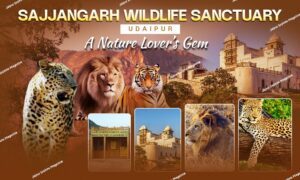
Sajjangarh Wildlife Sanctuary Udaipur: A Nature Lover’s Gem
Sajjangarh Wildlife Sanctuary Udaipur is one of Rajasthan’s most fascinating destinations, located at the foothills of the Aravalli ranges. Spread over 5.19 square kilometers, this protected sanctuary surrounds the majestic Monsoon Palace, also known as Sajjangarh Palace. Famous for its diverse flora, rich wildlife, and breathtaking views of Lake Pichola and Fateh Sagar Lake, it is a must-visit spot for nature lovers, wildlife photographers, and adventure enthusiasts.
Originally used as a royal hunting ground by the Mewar rulers, the area was declared a wildlife sanctuary in 1987. Today, it stands as a vital green zone of Udaipur, balancing history, culture, and conservation.
History of Sajjangarh Wildlife Sanctuary Udaipur
The sanctuary derives its name from Maharana Sajjan Singh, who built the Monsoon Palace in 1884. Initially, this forested region was reserved for royal hunting expeditions. Over time, due to its rich ecosystem and importance in preserving the natural balance of the Udaipur region, it was officially recognized as a sanctuary.
The historical presence of the palace overlooking the sanctuary adds a unique charm, making this place not just a wildlife hotspot but also a cultural and heritage-rich attraction.
Flora and Fauna
The Sajjangarh Wildlife Sanctuary Udaipur is home to dry deciduous and semi-evergreen forests. Teak, mango, jamun, neem, ber, khair, and bamboo groves dominate the vegetation, creating a perfect habitat for a wide variety of species.
Wildlife at a Glance
-
Mammals: Panthers, jackals, hyenas, sambhar deer, chital (spotted deer), nilgai, wild boars, sloth bears, Indian fox, and the rare four-horned antelope.
-
Birds: More than 120 species of birds including peacocks, parakeets, grey hornbills, kingfishers, and drongos. Endangered vultures such as Gyps bengalensis and Gyps indicus can also be spotted here.
-
Reptiles: Monitor lizards, Indian python, cobras, and various viper species thrive in this region.
The biodiversity makes the sanctuary a paradise for wildlife enthusiasts and photographers.
Key Attractions of Sajjangarh Wildlife Sanctuary Udaipur
1. Safari Experience
Visitors can enjoy jeep safaris or eco-friendly golf cart rides to explore the rugged terrain and spot wildlife in their natural habitat. The safari rides provide an adventurous yet safe way to experience the sanctuary.
2. Trekking and Nature Walks
For those who enjoy adventure, trekking routes lead to Monsoon Palace and Jiyan Lake. These trails are surrounded by dense greenery and offer spectacular panoramic views of the Udaipur cityscape.
3. Bird Watching
Early mornings and late afternoons are the best times for birdwatching. Bird lovers can spot migratory species along with local birds, making the sanctuary a vibrant ecosystem.
4. Jiyan Lake (Tiger Lake/Bari Lake)
Constructed in 1664 by Maharana Raj Singh, this artificial lake is located inside the sanctuary. Spread over 1.25 square miles and holding 400 million cubic feet of water, Jiyan Lake serves as a life source for the sanctuary’s wildlife and is also a scenic picnic spot.
5. Monsoon Palace View
The Monsoon Palace sits atop the Bansdara Hill, overlooking the sanctuary. It was originally designed to monitor monsoon clouds, and today it provides breathtaking views of Udaipur’s lakes and forests.
Timings and Entry Fees
-
Sanctuary Hours: 10:00 AM to 6:00 PM (Closed on Tuesdays)
-
Biological Park Hours: 9:00 AM to 5:00 PM (Closed on Tuesdays)
Entry Fees (Approx.):
-
Indians: ₹30–₹50
-
Foreigners: ₹300
-
Still Camera: ₹80–₹100
-
Video Camera: ₹200
-
Jeep Safari / Golf Cart Ride: ₹50–₹400 (depending on duration)
Best Time to Visit Sajjangarh Wildlife Sanctuary Udaipur
The best season to visit is October to March, when the climate is pleasant, making it ideal for safaris and trekking. During this period, migratory birds also flock to the region, enhancing the birdwatching experience.
It is advisable to avoid the monsoon months (July–September) as heavy rainfall may restrict access and make trails slippery.
How to Reach Sajjangarh Wildlife Sanctuary Udaipur
-
By Road: Located just 5–8 km from Udaipur city, easily accessible via taxis, cabs, or auto-rickshaws.
-
By Air: Maharana Pratap Airport is around 27 km away.
-
By Train: Udaipur Railway Station is approximately 8 km from the sanctuary.
Travel Tips for Visitors
-
Wear comfortable shoes and breathable clothing suitable for trekking and safaris.
-
Carry water, sunscreen, caps, and insect repellent.
-
Avoid carrying plastic and littering inside the sanctuary.
-
Follow the instructions of guides and officials for safety.
-
Do not feed animals or disturb their natural environment.
Recent Developments
In recent years, measures have been taken to improve conservation and eco-tourism inside the Sajjangarh Wildlife Sanctuary Udaipur. However, wildfires in dry seasons have occasionally posed threats, highlighting the need for continuous ecological preservation efforts.
Sajjangarh Wildlife Sanctuary Udaipur is more than just a wildlife reserve—it is a blend of history, natural beauty, and biodiversity. Whether you are an adventurer seeking trekking trails, a wildlife enthusiast hoping to spot rare animals, or a tourist admiring the Monsoon Palace’s heritage, this sanctuary offers an unforgettable experience.
A visit here connects you with nature while allowing you to explore Udaipur’s cultural heritage. For those planning a trip to Rajasthan, Sajjangarh Wildlife Sanctuary must be on your bucket list.
Monsoon Palace Udaipur
rajasthan tourism
Sajjangarh Wildlife Sanctuary Udaipur
Udaipur Wildlife Safari