
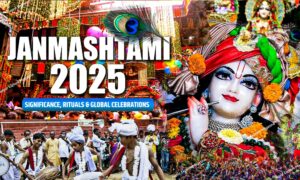
Janmashtami 2025: Significance, Rituals & Global Celebrations
What Is Janmashtami?
Janmashtami 2025 marks the birth of Lord Krishna, the eighth incarnation of Lord Vishnu, and is one of the most cherished Hindu festivals. Falling on the eighth day of the Krishna Paksha in the month of Bhadrapada, this celebration is filled with devotion, joy, fasting, and cultural traditions observed in India and around the world.
Janmashtami 2025: Date & Auspicious Timings
In 2025, Janmashtami will begin on August 15 at 11:49 PM and end on August 16 at 9:34 PM. The Nishita Puja (midnight worship) — believed to be the exact time of Krishna’s birth — will be held between 12:04 AM and 12:47 AM on August 16, with the divine birth moment at 12:26 AM. Many devotees stay awake all night, singing and praying until this sacred time.
Mythological Significance
According to Hindu mythology, Lord Krishna was born in Mathura to Devaki and Vasudeva. His birth took place under challenging circumstances, as his uncle King Kamsa feared a prophecy that Devaki’s eighth child would bring his downfall. To protect Krishna, Vasudeva secretly carried the newborn across the Yamuna River to Gokul, where he was raised by his foster parents, Yashoda and Nanda. This journey is symbolic of triumph over evil and the protection of righteousness.
Rituals and Traditions
Fasting and Midnight Vigil (Jagran)
Devotees observe a day-long fast, either consuming only fruits and milk (phalahar) or opting for a strict nirjal fast (without water). The fast is broken at midnight after performing the Nishita Puja. Throughout the evening, temples and homes echo with bhajans (devotional songs), kirtans, and readings from the Bhagavad Gita and Bhagavata Purana.
Worship and Decorations
Homes and temples are decorated with flowers, lights, and intricate rangoli designs. Idols of baby Krishna are bathed in milk, dressed in vibrant attire, and placed in beautifully adorned cradles or swings (jhoolas), symbolizing the joy of his arrival.
Dahi Handi Tradition
In Maharashtra and parts of North India, the day after Janmashtami is marked by Dahi Handi celebrations. Groups of young men, known as Govindas, form human pyramids to break earthen pots filled with curd, butter, or milk — recreating Krishna’s playful childhood habit of stealing butter.
Cultural Performances & Bhajans
The festival often features Raslila performances, dance dramas, and storytelling sessions depicting episodes from Krishna’s life. These events bring communities together in devotion, joy, and celebration.
Global Celebrations
Janmashtami is celebrated with devotion not just in India but across the world:
-
Mathura & Vrindavan: Grand processions, temple rituals, and devotional singing.
-
Nepal: Midnight prayers and bhajans at prominent Krishna temples.
-
USA: ISKCON temples host special kirtans, aarti, and cultural programs.
-
UK: Large-scale events at Bhaktivedanta Manor with music, dance, and spiritual talks.
-
South Africa: Temples organize community feasts, devotional singing, and dance programs.
Regional Customs & Delicacies
Braj Region Cuisine
Special satvik dishes like Panjiri, Panchamrit, Mathura peda, and fresh butter are offered as bhog to Lord Krishna.
Traditional Panjiri
A nutritious prasad made from coriander powder, dry fruits, sugar, and makhana, believed to be Lord Krishna’s favorite.
Ashtimki Festival in Nepal
Among the Tharu community, Janmashtami coincides with Ashtimki, which includes creating wall art called Ashtimki Chitra, fasting, and singing devotional songs.
Vastu & Spiritual Tips for Janmashtami 2025
-
Temple Decoration Vastu: Place Krishna’s idol facing north or east. Use auspicious colors like yellow, red, or green, and keep the space clean and sacred.
-
Five Auspicious Items to Bring Home: Items like white butter, tulsi plant, yellow clothes, conch shell, and flute are believed to invite blessings.
-
Buddh-Mangal Yog Remedies:
-
Offer white butter and sugar candy.
-
Light a ghee lamp near the tulsi plant.
-
Chant the Vishnu Sahasranama.
-
Donate yellow and red items.
-
Perform Charanamrit Abhishek of Lord Krishna.
-
These rituals are believed to enhance spiritual energy and attract divine blessings during this special planetary alignment.
Dahi Handi 2025
Gokulashtami 2025
Janmashtami 2025
Janmashtami celebrations
Janmashtami date 2025
Janmashtami fasting
Janmashtami rituals
Janmashtami Vastu tips
Krishna Janmashtami 2025
Lord Krishna birthday 2025


