Palaces in Jaipur That Showcase Royal Grandeur
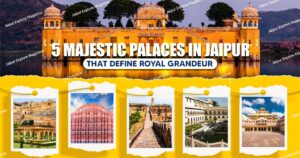
Palaces in Jaipur are a testament to Rajasthan’s royal legacy and architectural brilliance. Known as the Pink City, Jaipur houses some of India’s most iconic palaces, each narrating stories of kings, queens, and their lavish lifestyles. These heritage landmarks not only captivate history enthusiasts but also attract global travelers looking to experience grandeur, art, and culture. Let’s explore the five most stunning palaces in Jaipur that define its royal charm.
1. City Palace
Location: Heart of Jaipur.
Why Visit:
-
The City Palace remains partially a royal residence, but much of it is open to the public.
-
Architectural blend: Mughal and Rajput styles create a harmonious mix of elegance.
-
Key highlights: Chandra Mahal, Mubarak Mahal, the City Palace Museum, and the Shri Govind Dev Temple. Intricate frescoes, royal portraits, artefacts—all preserving the narrative of Jaipur’s past.
Visitor Tips:
-
Go early morning to avoid crowds and heat.
-
Don’t miss the museum section for its regal costumes, weapons, old manuscripts.
-
Combine visit with nearby bazaars for local crafts & textiles.
2. Amer Palace (Amber Fort)
Location: On a hill overlooking Maota Lake, just outside old Jaipur.
Why Visit:
-
A UNESCO World Heritage site known for its massive ramparts, grand gates, and fusion of Rajput + Mughal styles.
-
Marvels include Diwan-e-Aam (Hall of Public Audience), Sheesh Mahal (Mirror Palace), Sukh Niwas (with its cooling water channels), and the ornate Ganesh Pol.
-
Shila Devi Temple within the palace adds spiritual significance and beautiful artistry.
Visitor Tips:
-
Wear comfortable shoes; paths are steep and large.
-
Sunset or early morning light gives gorgeous views for photography.
-
Try the light & sound show (available certain evenings) for a dramatic historical storytelling.
3. Hawa Mahal (“Palace of Winds”)
Location: In the old city centre, facing the busy bazaars.
Why Visit:
-
Excellent example of pink and red sandstone design; famed façade with 953 jharokhas (small windows), making it look like Lord Krishna’s crown.
-
The latticework (jali) architecture allowed royal ladies to observe street life without being seen. Also, airflow passes through the windows keeps the palace cool — hence “Wind Palace.”
Visitor Tips:
-
Best times for photos: early morning or around sunset when the light softens the stone hues.
-
Climb up to the top floors for views of the city.
-
Combine with a walk through the old bazaar nearby (Johari Bazaar etc.), both for shopping & experiencing local life.
4. Jal Mahal (“Water Palace”)
Location: Mid-Man Sagar Lake.
Why Visit:
-
A picturesque palace seemingly floating on water. Only the top floor is visible above lake level, with the rest submerged — a clever architectural illusion.
-
Built with pink sandstone, Rajput design motifs, and surrounded by water and hills that reflect in its surface. A favourite for tranquil views, sunset shots, and birdwatching in the lake’s surroundings.
Visitor Tips:
-
You cannot enter the Jal Mahal, but there are good viewpoints along the lake’s perimeter.
-
Best time: around sunset for golden hour lighting.
-
Bring binoculars if you like birdwatching, especially in early morning.
5. Rambagh Palace
Location: On spacious grounds in Jaipur, now part of luxury hotel heritage.
Why Visit / Stay:
-
Once a garden retreat, later converted into a royal residence, now transformed into a luxury hotel by the Taj group. Known as “The Jewel of Jaipur.”
-
Indoor & outdoor grandeur: Indo-Saracenic architecture, ornate domes, elegant marble work, beautiful gardens, jali screens, balconies with stone carving. Staying here means immersing oneself in royal lifestyle.
Visitor Tips:
-
If budget permits, stay at least one night to enjoy the grounds, high tea, and the ambiences (dawn, dusk) with fewer crowds.
-
Even if you don’t stay, many hotels allow non-guests in certain public areas (restaurants, gardens)—check permissions ahead.
-
Ideal for those who enjoy heritage accommodation, fine dining, and pampered service in regal settings.
Travel & Planning Insights
-
Best Time to Visit: October to March — cooler weather, clear skies; avoid monsoon & hottest summer months.
-
How to Reach: Most palaces are easily accessible from Jaipur city centre via car, tuk-tuk or local guides. Amer Fort is uphill — plan accordingly.
-
Tickets & Timings: Many palaces have entry fees (differing for Indians / foreigners), set hours. Check current schedules.
-
Guided Tours: Hiring a local guide adds context (history, legends, architecture) that makes the visit richer.
-
Photography Tips: Early morning / late afternoon for softer light; bring wide angle lens for interiors; respect rules (many places restrict flash or drone usage).
Why These Palaces Matter
These palaces are more than just majestic buildings: they embody Jaipur’s heritage — royal traditions, artistry, craftsmanship, stories of kingdoms. Their architecture marries Mughal symmetry with Rajput fortitude. Visiting them connects you to the narratives of Maharajas, artisans, wars, festivals, religion, and the continuum of culture that makes Jaipur uniquely beautiful.