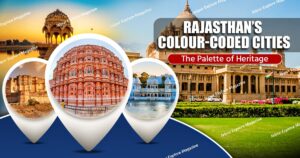
Rajasthan’s Colour-Coded Cities: The Palette of Heritage
Rajasthan, the land of kings, forts and endless desert horizons, draws travellers not only for its history and culture but also for its vivid tapestry of colours. Each major city seems painted in its own distinctive shade, creating a unique identity that lingers in the memory. Jaipur is pink, Jodhpur blue, Udaipur white, Jaisalmer golden — these are not just poetic descriptions but reflections of architecture, environment, tradition, and symbolic values. Let’s explore the ‘colour code’ behind Rajasthan’s iconic cities, and why they matter.
Why Colours Matter in Rajasthan
Colour in Rajasthan is about more than looks. It’s a language of:
-
Identity — Colours distinguish one city from another, making them instantly recognisable.
-
Climate adaptation — Specific hues help with cooling or reflectivity, important under harsh sun and desert heat.
-
Symbolism & tradition — Colours carry cultural, religious or social meanings; certain communities adopted certain colours.
-
Rule & heritage preservation — Many colour schemes have royal or official origin stories; some laws or norms ensure that the appearance remains consistent.
The Cities & Their Colours
| City | Nickname / Colour | Origins / Significance | What You’ll See |
|---|---|---|---|
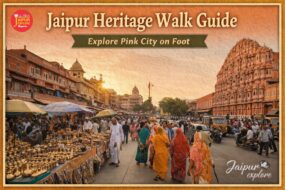
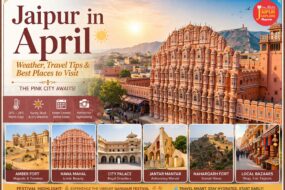
| Jaipur — The Pink City | Pink / Terracotta-Rose | In 1876, Jaipur was painted in a pinkish hue to welcome Prince Albert and Queen Victoria. The colour was chosen to symbolise hospitality. Since then, many of its buildings, especially in the old parts, have retained that hue. EBNW Story+3Japmeet Holidays+3The Times of India+3 | The famous Hawa Mahal (Palace of Winds), City Palace, vibrant bazaars, narrow lanes with facades in warm pinks and light reds. The overall ambience glows particularly at sunrise/sunset. |
| Jodhpur — The Blue City | Blue / Indigo-washed | Several traditions are attributed to Jodhpur’s blue hue: It’s said that Brahmins (priests) painted homes blue to distinguish themselves; others say blue wash helps keep houses cooler in the desert heat. Another view links blue to Lord Shiva (who is associated with the colour blue). Over time, the trend spread to non-Brahmin households. The cooling effect and pest/reptile-rejection aspects are also cited. CNN+2Dinogo.com+2 | From the ramparts of Mehrangarh Fort, one sees clusters of blue houses sprawling out below. Blue walls, doors, rooftops; old town alleys richly shaded. The city looks especially dramatic against the arid landscape. |
| Jaisalmer — The Golden City | Golden / Honey-Yellow | Jaisalmer’s glow comes naturally: its buildings and the fort are built from local sandstone which reflects golden hues especially under sunrise or sunset. The stone is hand-chiseled, and the architecture includes intricately carved havelis and fort walls that shimmer like gold in certain light. CNN+2Rajasthan Studio+2 | The famous Jaisalmer Fort (also called Sonar Quila or Golden Fort), Patwon Ki Haveli, Salim Singh Ki Haveli, narrow sandy-lane streets, desert dunes near Sam and Khuri which at dusk turn into a painter’s canvas. |
| Udaipur — The White City | White / Marble & Lakes | Udaipur’s nickname comes from its lakeside architecture and the use of marble and pale stone in its palaces, ghats, and temples. Water reflections enhance its light tones, often making the city appear luminous especially early in the morning or under moonlight. Marble, whitewash and light façades are common. Japmeet Holidays+1 | The City Palace by Lake Pichola, the ghats, Jardines, Jagdish Temple, Saheliyon Ki Bari, and the calm water surfaces reflecting the pale façades. Udaipur’s aesthetic is more serene compared to Jaipur or Jodhpur. |
Other Colourful Influences & Variations
-
Material choice: Local stones, marble, and paints affect how colours appear in different lights. For example, sandstone in Jaisalmer changes visually through the day.
-
Sunlight & time of day: Morning and evening light intensifies hues, gives more depth to the warm tones in pink-façades, golden stones, or blue walls.
-
Maintenance and regulations: In Jaipur, many buildings are maintained in the pink shade; authorities sometimes mandate repainting to preserve the historic character. Japmeet Holidays+1
-
Cultural festivals and dresses: The colours spill over into local attire, crafts, textiles (like leheriya dye work), decorations. The overall visual culture amplifies what architecture starts. Wikipedia+2The Independent+2
Why It Matters for Travelers & Heritage
-
Photogenic appeal: These colour schemes make for iconic photos — perfect glow at sunset, reflections in waters, contrast with desert or greenery.
-
Cultural immersion: Understanding the reasons behind the colours (traditions, caste, climate) offers a deeper insight into Rajasthan’s social history.
-
Heritage conservation: Colour isn’t superficial; it’s part of each city’s identity. Preserving colour schemes helps maintain architectural integrity and historic atmosphere.
-
Tourism marketing: These nicknames (Pink City, Blue City, etc.) act like slogans, drawing attention worldwide.