Strait of Hormuz Vessel Limit Impact: A Global Energy Crisis Unfolding
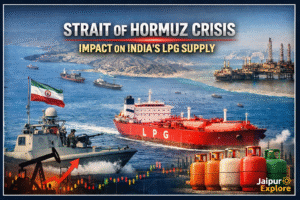
The Strait of Hormuz Vessel Limit Impact has become a major concern for global energy markets, especially for India, after Iran reportedly decided to allow only limited ships through this crucial maritime route. Despite a fragile ceasefire, the restriction is expected to disrupt oil and LPG supplies, increase prices, and trigger economic uncertainty worldwide.
The Strait of Hormuz, a narrow waterway between Iran and Oman, is one of the most critical energy chokepoints in the world. It carries nearly 20% of global oil trade, making any disruption a serious global issue.
Iran’s Vessel Limit: What Has Changed?
Under the recent ceasefire arrangement, Iran is reportedly allowing no more than 15 vessels per day to pass through the Strait of Hormuz.
Before the conflict, approximately 130–140 ships crossed daily, which means traffic has dropped drastically—by nearly 90%.
This move signals Iran’s attempt to assert control over the strategic waterway, rather than restoring normal operations even after the ceasefire.
Key Highlights:
- Only 15 ships allowed daily
- Pre-war average: 130+ ships per day
- Severe backlog of vessels in the Gulf
- Increased scrutiny and control by Iranian authorities
Why the Strait of Hormuz Matters Globally
The Strait of Hormuz Vessel Limit Impact goes beyond regional tensions. This waterway is vital for transporting:
- Crude oil
- Liquefied Natural Gas (LNG)
- Fertilisers and petrochemicals
About one-fifth of global oil supply passes through this route, making it indispensable for energy security.
Even a partial restriction can disrupt global supply chains, causing:
- Rising oil prices
- Increased shipping costs
- Inflation in multiple economies
Recent reports indicate that shipping traffic remains extremely low despite the ceasefire, highlighting ongoing risks and uncertainty.
Impact on India’s LPG Supply
India is among the worst-affected countries by the Strait of Hormuz Vessel Limit Impact.
Heavy Dependence on the Strait
- Nearly 90% of India’s LPG imports pass through the Strait of Hormuz
- India is the second-largest LPG importer globally
Current Situation
- Several Indian ships are still stuck in the Persian Gulf
- Only a limited number of LPG carriers have successfully crossed
- India is actively requesting Iran to speed up shipments during the ceasefire window
Real Impact on Indian Consumers
- LPG shortages in some regions
- Rising cylinder prices
- Supply prioritisation for domestic use
- Reduced industrial gas allocation
India has already experienced one of its worst gas crises in decades due to the disruption.
Ceasefire: Why It Hasn’t Solved the Problem
Although a ceasefire between the US and Iran raised hopes, the Strait of Hormuz Vessel Limit Impact continues.
Reasons:
- Limited Ship Movement
Only a fraction of normal traffic is allowed. - Security Concerns
Shipping companies remain cautious due to:- Naval risks
- Mines and attacks
- Insurance costs
- Iran’s Control Measures
Iran requires ships to:- Coordinate with authorities
- Follow designated routes
- Possibly pay transit fees
- Backlog of Ships
Hundreds of vessels remain stranded, and clearing them could take weeks.
Global Oil Prices and Economic Impact
The Strait of Hormuz Vessel Limit Impact is already visible in global markets.
Key Effects:
- Oil prices have surged significantly
- Shipping costs have increased
- Insurance premiums for vessels have risen
- Supply chain disruptions are affecting industries
Experts warn that prolonged restrictions could push oil prices even higher, affecting:
- Transportation costs
- Food prices
- Inflation rates worldwide
Alternative Routes: Are They Enough?
Countries are trying to bypass the Strait, but alternatives are limited.
Options Include:
- Saudi Arabia’s East-West pipeline
- UAE’s Fujairah port route
- Iraq’s pipeline to Turkey
However, these routes cannot match the capacity of Hormuz, which handles massive daily volumes of oil shipments.
India’s Response to the Crisis
India is taking several steps to manage the Strait of Hormuz Vessel Limit Impact:
Government Measures:
- Requesting Iran to prioritise Indian shipments
- Granting waivers for certain cargo deliveries
- Allowing Iranian oil tankers to dock under special permissions
Strategic Actions:
- Increasing fuel reserves
- Exploring alternative suppliers
- Deploying naval support for safe passage
Future Outlook: What Lies Ahead?
The future of the Strait of Hormuz Vessel Limit Impact depends on geopolitical developments.
Possible Scenarios:
- Gradual Normalisation
If tensions ease, ship traffic may slowly increase. - Continued Restrictions
Iran may maintain control and limits for strategic leverage. - Renewed Conflict
Any escalation could completely shut the Strait again.
Experts believe it may take weeks or even months for global shipping to return to normal levels.
Conclusion
The Strait of Hormuz Vessel Limit Impact is a critical issue affecting not just regional stability but the global economy. Iran’s decision to limit vessel traffic, even after a ceasefire, has created a ripple effect across energy markets.
For India, the stakes are particularly high due to its heavy dependence on LPG imports through this route. Rising prices, supply shortages, and economic pressure highlight the urgent need for diversified energy strategies.
As the situation evolves, the world will continue to watch the Strait of Hormuz closely—because what happens here impacts millions of lives globally.