
Rajasthan remains full of surprises. Central to this rich heritage is the Traditional Dress of Rajasthan, a vivid and refined reflection of identity, climate, and class. Far from mere clothes, local attire works like a wonderful fashion compendium that brings together the different ecologies of the region – starting with the smooth cottons of the plains, to the thick woolens necessary during desert nights — along with its centuries-old traditions. In this book, the author describes the unique aesthetics of Rajasthani style and how each garment tells a story of this desert kingdom through its colours, symbols, and patterns.
Traditional Dress for Women in Rajasthan
Ghagra Choli: Tradition Meets Grace
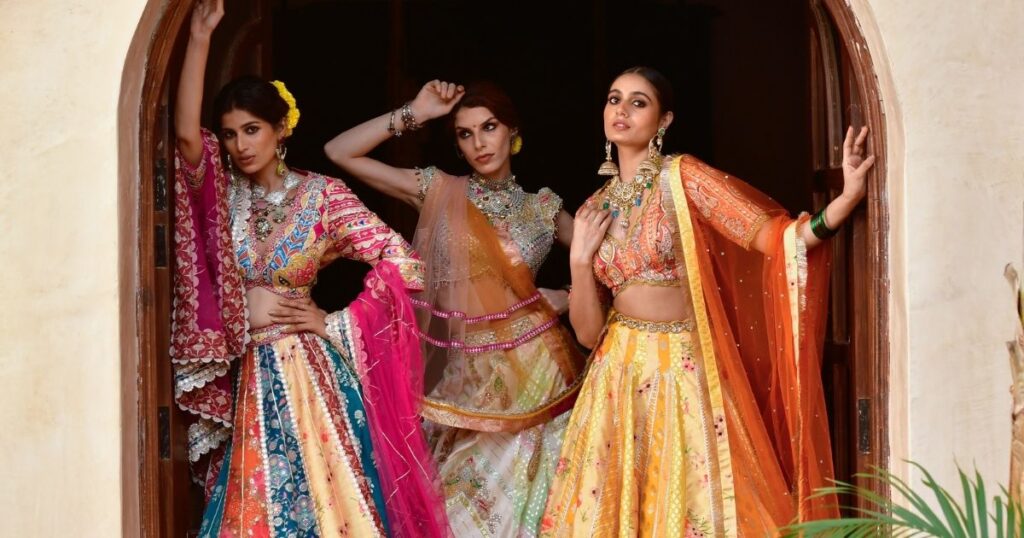
Ghagra Choli is a kind of Indian ethnic wear that is worn by a North Indian woman along with keeping the tradition inculcated. Ghagra The skirt part of the Lehenga Choli is known as the Ghagra, which is not only vibrant and colorful but also contains an admirable work of intricate hand embroidery techniques or mirror work, similar to that seen in Lehenga Choli. It’s usually worn with the garment Choli, a snug, body-fitting blouse that looks good and matches the skirt in decoration and colour.
The women are naturally beautified, and they embellished this dress by adding ornaments such as rakhdi for the forehead and bajubandh for the arms, enhancing its royal look. Combined, the two factors strike a harmonious balance between beauty and comfort – an apt solution in the blend of Rajasthan’s climatic nuances. Each item of clothing, from the pleated Ghagra to the embellished Choli, holds a story about culture and heritage that’s as over the top as it is symbolic.
Bandhani Saree: The Art of Tie and Dye
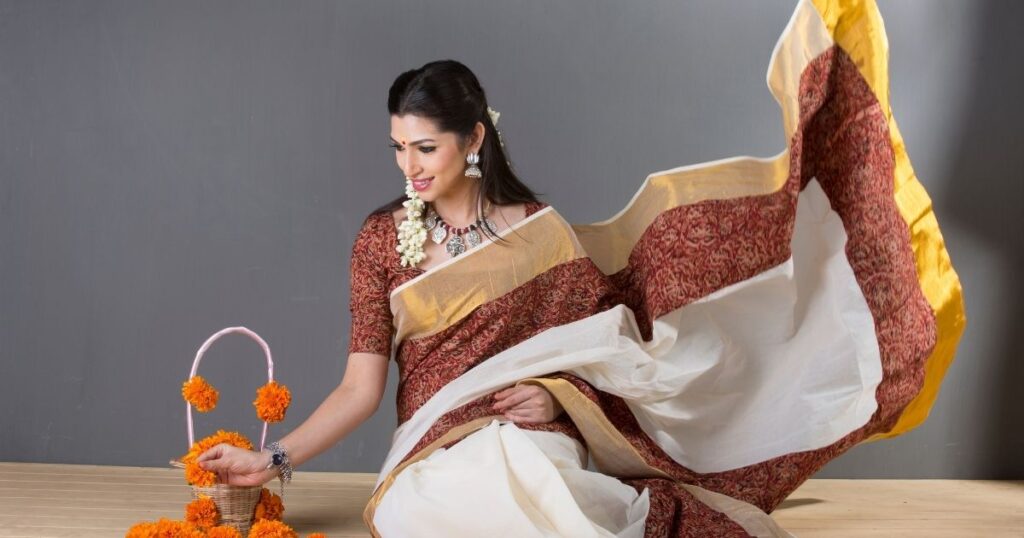
Testimony to the rich cultural heritage of Rajasthan in its textile art (repeats itself). This classic cotton two-piece is made using a special tie-dye process, which results in some variations in colour from piece to piece and makes each of the garments unique. The different types of turban colours, or the Safa in Rajasthani textiles, is also paired along with these sarees, which highlights a coordinated look. It is interesting to note that the color of these Safa Turbans changes with respect to the weather, or they might wear a specific type of turban at celebrations in order to match colorful sarees.
Countless little pieces of material are tightly tied and dyed to form the intricate patterns that can be vivid and complex. Bandhani sarees are indeed visually beautiful, and they have a long cultural association, reminiscent of everything from auspicious occasions to festivals and marriages across the region.
Odhni: The Signature Veil
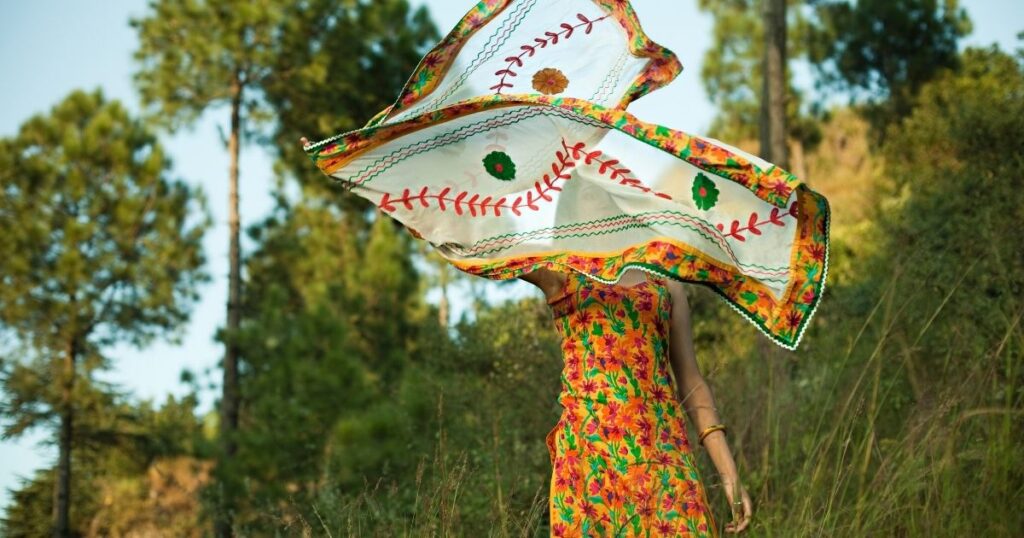
No Rajasthani ensemble for women is complete without the Odhni, symbolizing elegance and decency. Flowing meters, the flowing length varies between 2 -3, and is worn over the head and shoulders, held in place by a Ghagra Choli. Available in rich and bright hues along with fancy edge work, Odhni sarees, or odhanis generally have Bandhni prints or fine embroidery. They are worn as a physical expression of fashion and cultural meaning, which is the respect or social status that a woman holds. The Odhni is a very complementary feature, be it for an occasional outfit or daily wear for the traditional Rajasthani attire.
Salwar Kameez: Elegance Redefined
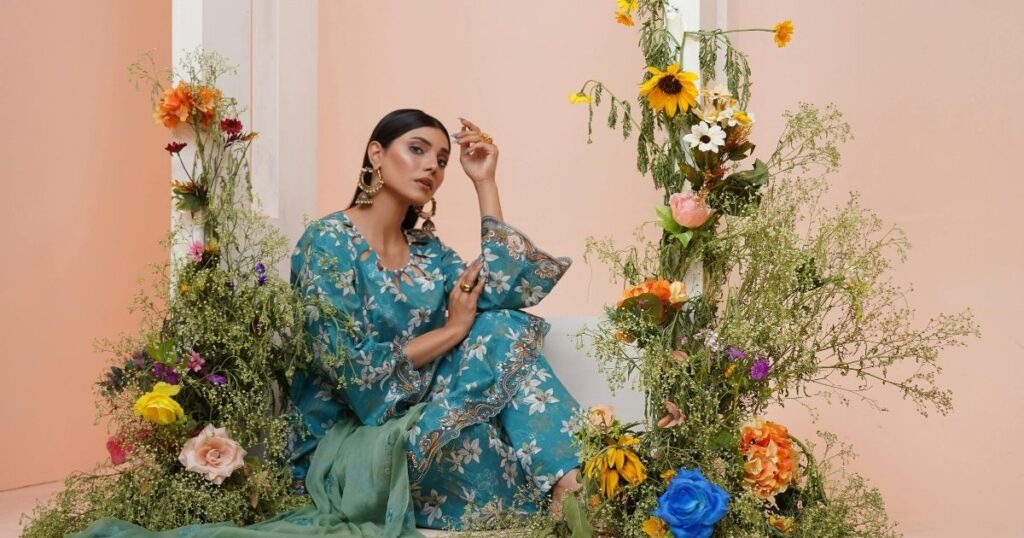
Salwar Kameez in Rajasthan has a new definition -it is dispensed away with the traditional beauty it was previously attached to, rather it is more contemporary, stylish, and comfortable. With a long tunic or kameez balanced paring with the slim trousers or salwar, this outfit will give you a graceful look for any event. Local patterns vary, and the Rajasthani style in particular is very bright and heavily embroidered, representing local craft. The attire could also be matched with a dupatta that adds elegance to the look. This elegance meets style amalgamation makes the Salwar kameez a hit for everyday wear and special occasions as well, in step with modern tastes of fashion in Rajasthan, yet remaining steeped in traditionalism.
Rajputi Poshak: Royal Symbolism
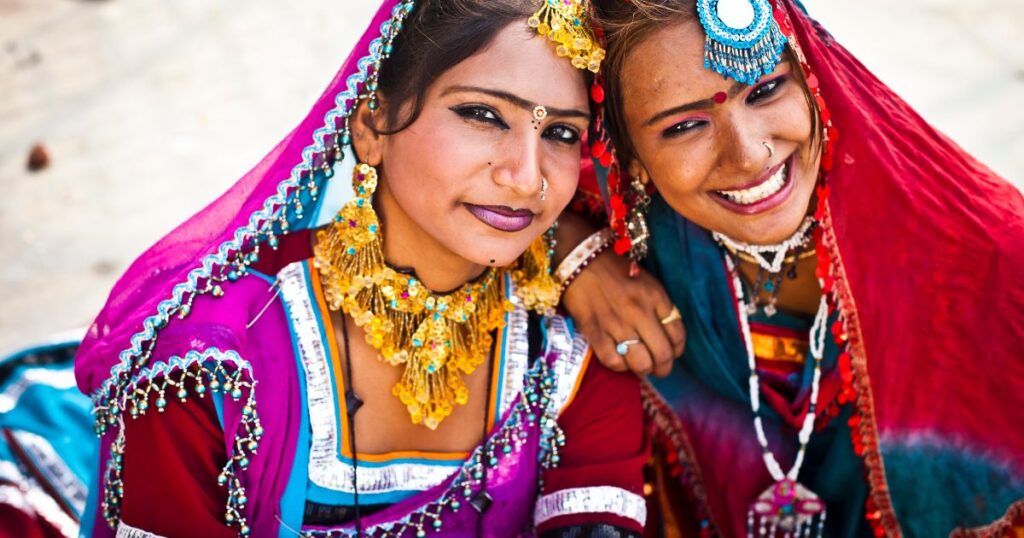
Rajputi Poshak is an attire of royalty that has the essence of Rajasthani royal ancestry. Worn by high-class Rajput ladies of the state, this dress has a total of four parts, which include a kurti (blouse), odhni (veil), ghagra, and kanchli. Every part of it is so delicately designed that it takes after both layers, bespangled with fabulous weaving, zari work, stone additions in animal prints, and rich silk velvet. The colours are generally very lively in relation to cultural symbolism and occasion.
These ingredients are the embodiment of royalty and a luxurious appeal observed in places like Jaipur, Jodhpur, Udaipur, etc, where certain prints and bright colors like red and yellow were used mostly. The Rajputi Poshak – A Symbol of Aristocracy and Cultural Identity. The royal attire is rarely worn during festivals, weddings , or cultural occasions by the high-born women while going to temples or on auspicious events that they are attending. A few pieces of traditional jewellery complete the outfit, with fancy patterns that represent the royal India’s timeless grace.
Gujarat’s ethnic wear tells a beautiful story with patterns buckled with mirror work reflecting its vibrant history. Exquisite traditional Dress of Gujarat reveals the state’s strong base in the artistry of weaving, as you will find even when you read through this Guide to Traditional Dress of Gujarat with pictures. This is a heritage wear that forms part of important cultural festivals and ceremonies, wonderfully displaying local artisans’ unique workmanship.
Traditional Dress for Men in Rajasthan
Angrakha: Blend of Trends of Rajasthani Clothing
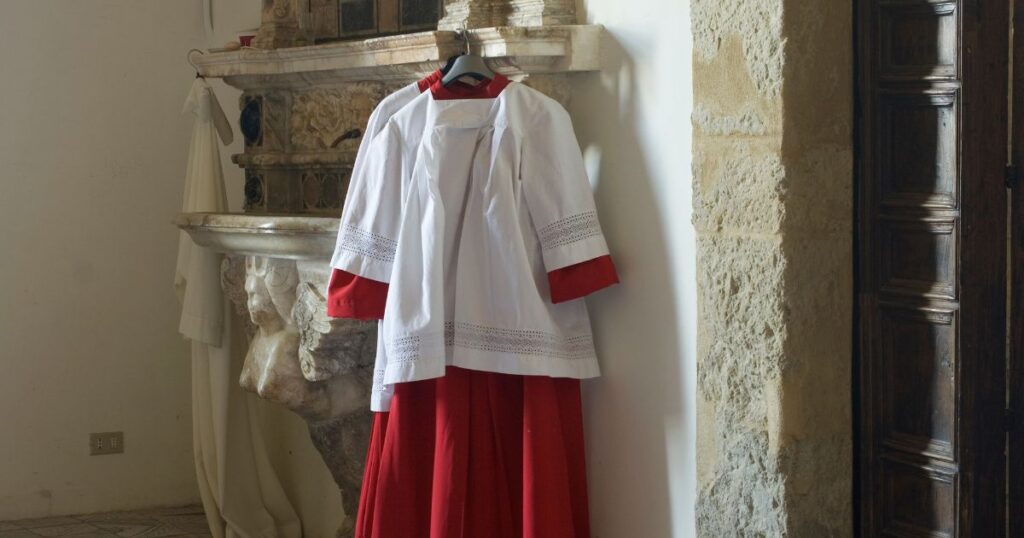
Angrakha is a famous dress of Rajasthani men’s attire, which is known for its comfort and style. The conventional wear has two versions, the shorter Kamari Angrakha and the full-length Kachli. The Angrakha, which is tied to the side and worn with an underskirt, is recommended for the sultry Ghagra Choli. The dress has detailed embroidery and mirror work to ensure a flavor of the vibrant and majestic textile art, that Rajasthan is known for! Besides the angrakha, the Bandhgala too is another favourite which can be donned at high-end events like weddings.
Neither dress is just an object of beauty but a symbol of the wearer’s (and her society’s) sophistication and historical continuity, reflecting some intricate social system – possibly also caste-based, such as in Rajasthan. Angrakha is absolutely multi-purpose and can be worn on special cultural days.
Pagri (Turban): The Pride Symbol and Sign of Courage
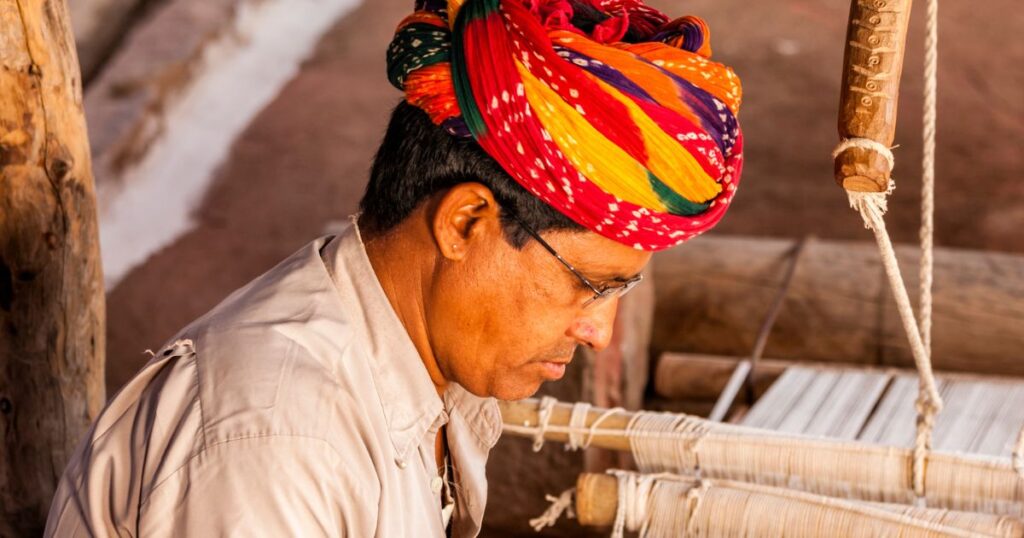
The Pagri, or turban, is a shining example of honor, valiance , and Rajput heritage. The type and style of headgear differ according to the social status, community, ethnicity, or even the region one belongs to. Made of either cotton or silk, the Pagri is frequently colourful and decorated with patterns, just as the various hairstyles and classical make-up that accompany it in Rajasthan’s rich culture. All these different types of turbans are proudly sported at festivals, weddings, and religious functions, and have their own special significance – they narrate tales of courage and heritage just like other cultural elements like camel wool clothing.
Therefore, the Pagri serves both as a practical protection against the intense desert sun and a holy symbol of honour and respect. Men and women both wear jootis or pointy-toed shoes in Rajasthani attire, along with their headgear. Decorated with multi-colored embroidery or embellishments made of leather, jootis are the perfect addition to traditional attire, similar to Mojadi footwear, and represent a blend of cultural aesthetics with daily use.
Dhoti and Pyjamas: The Integral Attire
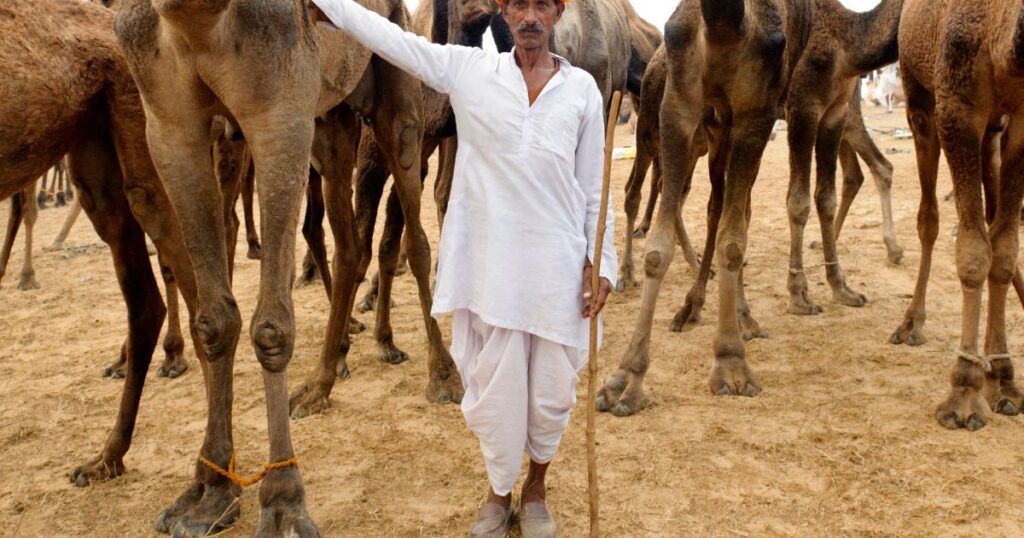
Dhoti and Pyjamas Dhoti and Pyjama is an integral part of Rajasthani men’s Traditional Attire, reflecting simplicity blended with traditional grace. The Dhoti – half trousers of a three-piece attire covering the body from waist to ankle, is a comfort wear in the hot climate of Rajasthan. Made out of cotton, it is worn with a kurta or angrakha to give a noble look. While at opposite ends of the spectrum, vintage Pyjamas, which are typically a white or pastel pair, have evolved to complement India’s tunics, substituting stiff trousers for more relaxed and easy-wearing options. An outfit that serves as a formal dress, religious attire, as well as a horse riding costume, and also reflects the traditional wear of Rajasthani women in general.
Iconic Motifs in Rajasthani Traditional Dresses
Chameli and Marigold: Floral Inspirations
In Rajasthani attire, floral designs such as Chameli (Jasmine) and Marigold are highly aesthetic and symbolically significant. These designs are woven(prime) or printed(second) in the fabric most of the time with techniques like Chunari, Bandhej, reflecting the natural beauty and cultural importance of these flowers on regional festivals and rituals. In the world of flowers, Chameli stands for purity and elegance, and Marigold is a symbol of vibrance and joy.
These designs are commonly seen in women’s crafts such as sarees, lehengas, and dupattas, both stuck to as well as having spiritual meanings. Conventional accessories that go with these clothes are embellished jewellery, like a maang tikkas for the forehead, and adorned neck pieces like Raani Har to complete the festive look. With these floral inspirations, the visual appeal of this garment is enriched and serves as the perfect embodiment of Rajasthan’s culture. Fancy neckpieces add to the perfection of this attire.
Bhalka and Borhiya: Geometric Patterns
Embroidery, geometric design, and Bhalka and Borhiya motifs popular in Rajasthani traditional dress for men, depict a balance of artistic form. These motifs, which are typically repeating or angular in shape, can be found in all types of men’s and women’s fashion and create visual interest. Bhalka and Borhiya often have a symmetrical design representing balance and order; in the case of Bhalk, they are both grid-like formations. They symbolize not just aesthetic appeal but also the bravery and valor inherent in Rajasthani history.
They are also complemented by traditional necklaces and other jewelry, with the forehead being covered with a borla or maang tikka. Such motifs, when represented in the form of block-prints, embroidery, or woven patterns, beautifully cover household items and clothing, especially turbans, sarees & lehengas. Weaving geometric patterns into clothing is not only a testament to the skill of Rajasthani artists but also serves as a way to keep their rich cultural history and narratives alive through style.
Goonda and Gul: Narrative Motifs
Goonda style and Gul pattern lend Rajasthani wear its complex narrative tradition and storytelling impulse. These patterns are sometimes referred to as stories that illustrate folklore, the beauty of things found in nature, or historical events, used as a way of recording history and artistic expression. The Goond chakaltan: showing scenes from real life or mythical stories, a depiction of the lively lifestyle and tradition of Rajasthan. Gul, on the other hand, symbolises floral designs and combines realism with artistic impressions, especially for representational purposes.
These designs are incorporated creatively into fabric through complex embroidery or precise block printing, resulting in embellished saris and turbans, and other clothing. Complimentary accessories in the form of bangles and patka make the ensemble look complete, giving cultural coherence and beauty. The colourful decorative pieces like small water-drop shaped silver or better still ball-shaped worn on the forehead of women along with “gole” (jewels) enrich the costume by giving its shimmering effect recognized worldwide. Rajasthani clothes give wearers a beautiful work of art and a link to the long history and culture of Rajasthani by including Goonda and Gul.
Conclusion: Legacy of Rajasthani Traditional Clothings
The Rajasthani traditional wear is always fascinating with bright colors, beautiful design, and its cultural value. Every piece, be it the magnificent Rajputi Poshak, the practical Angrakha, or the striking Bandhani Saree, is a fruit of history and craftsmanship. These garments are not just a record of Rajasthan’s history but a tribute to its living traditions, every stitch and motif bearing the patterned patina of beauty, identity, and resilience. Amidst the rapid change in the world, they are also a reminder of the timeless cultural relevance and appeal of these traditional clothes as they continue to be loved and revered from generation to generation, keeping alive the spirit of Rajasthan.
