Tal Chhapar SanctuaryGuide: Explore Rajasthan’s Blackbuck Paradise
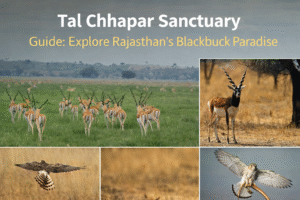
Tal Chhapar Sanctuary stands out as one of Rajasthan’s most distinctive wildlife destinations, offering a rare grassland ecosystem in a state better known for deserts and forts. Unlike dense forests or mountainous reserves, this sanctuary presents wide open plains where wildlife can be easily observed in its natural rhythm.
Located in the Churu district near Sujangarh, Tal Chhapar Sanctuary provides an ideal setting for travelers who seek quiet nature experiences, photography opportunities, and close encounters with animals without the overwhelming crowds of larger national parks.
Geographical Setting and Landscape
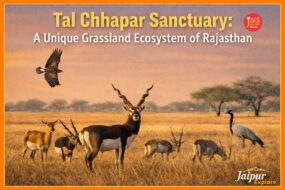
The terrain of Tal Chhapar Sanctuary is characterized by flat saline depressions locally known as “tal.” These lands fill with rainwater during the monsoon and gradually transform into dry grasslands, creating a habitat suitable for grazing animals and ground-nesting birds.
The vegetation is sparse yet ecologically significant, consisting mainly of:
- Short grasses
- Scattered acacia trees
- Shrubs adapted to arid conditions
This type of landscape enhances visibility, making it easier to spot wildlife even from a distance.
Wildlife Highlight: The Blackbuck
The most iconic resident of Tal Chhapar Sanctuary is the blackbuck, a graceful antelope species native to the Indian subcontinent. The sanctuary supports a thriving population, making it one of the best places in India to observe these animals in large numbers.
Male blackbucks are easily recognizable due to their dark coloration and spiral horns, while females have a lighter, sandy appearance. Their speed and agility are remarkable, often seen in coordinated group movements across the plains.
The open habitat allows visitors to witness their natural behavior, including grazing, social interaction, and sudden bursts of high-speed running.
Birdlife and Migratory Species
Tal Chhapar Sanctuary is equally significant for bird enthusiasts. Its location along migratory routes attracts a wide variety of birds, especially during the winter months.
Visitors can expect to see:
- Harriers gliding low over the grasslands
- Eagles and raptors perched or hunting
- Cranes and other migratory species resting during long journeys
The sanctuary’s ecosystem supports both resident and seasonal birds, making it an excellent destination for bird photography and observation. Early mornings and late afternoons are particularly rewarding for sightings.
Other Fauna in the Sanctuary
Apart from blackbucks and birds, Tal Chhapar Sanctuary hosts several other species that contribute to its ecological diversity. These include:
- Desert foxes
- Chinkara (Indian gazelle)
- Jackals
- Reptiles suited to dry environments
Though less visible than blackbucks, these animals play an important role in maintaining the ecological balance of the region.
Best Time to Visit
The ideal time to explore Tal Chhapar Sanctuary is between October and March. During this period:
- The weather remains pleasant
- Migratory birds arrive in large numbers
- Wildlife activity is easier to observe
Summer months can be extremely hot, which may limit outdoor exploration.
How to Reach Tal Chhapar Sanctuary
Tal Chhapar Sanctuary is well-connected by road and can be accessed through nearby towns and cities:
- Nearest town: Sujangarh
- Nearest railway station: Ratangarh or Sujangarh
- Nearest airport: Jaipur
Travelers can hire taxis or use private vehicles to reach the sanctuary comfortably.
Why Tal Chhapar Sanctuary Deserves Attention
While Rajasthan is famous for destinations like Jaipur, Udaipur, and Jaisalmer, Tal Chhapar Sanctuary offers a completely different experience. It is ideal for:
- Nature lovers seeking tranquility
- Wildlife photographers
- Bird watchers
- Educational trips for students
The absence of dense crowds allows visitors to connect with nature in a more personal and uninterrupted way.
Conservation Importance
Tal Chhapar Sanctuary represents a fragile ecosystem that requires continuous conservation efforts. Grasslands are often overlooked compared to forests, yet they are equally vital for biodiversity.
Challenges such as changing climate conditions, water scarcity, and human interference can impact this habitat. Protecting such areas ensures the survival of species that depend on open landscapes.
Final Words
Tal Chhapar Sanctuary offers a refreshing perspective on wildlife tourism in Rajasthan. Its open grasslands, thriving blackbuck population, and rich birdlife create an environment that is both peaceful and visually captivating.
For those looking beyond traditional tourist circuits, this sanctuary provides an opportunity to experience nature in its simplest and most authentic form. A visit here is not just a trip, but a chance to observe the delicate balance of life in one of India’s unique ecosystems.
Bird Watching Rajasthan
Blackbuck Sanctuary India
Churu Tourism
Rajasthan Wildlife
Tal Chhapar Sanctuary
Wildlife Travel Guide