Grassland Restoration in India: A Conservation Blueprint for the Future

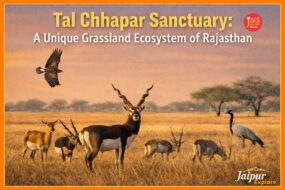
Grassland Restoration in India is no longer just an environmental concept—it is becoming a proven strategy for reviving biodiversity, sustaining wildlife, and restoring ecological balance. One of the most inspiring examples comes from Rajasthan’s Tal Chhapar, where a once-degraded ecosystem has transformed into a thriving sanctuary, offering a powerful blueprint for conservation efforts across the country.
The Forgotten Ecosystems
Grasslands in India have historically been overlooked. Conservation narratives have largely focused on forests, often ignoring the ecological importance of grassland ecosystems. Yet, these landscapes are critical habitats for species like blackbucks, wolves, and the critically endangered Great Indian Bustard.
Despite their importance, grasslands have suffered extensive degradation due to invasive species, overgrazing, and land-use changes. In many cases, they were even misclassified as “wastelands,” leading to policies that encouraged tree plantations instead of preserving native grass ecosystems.
This neglect has resulted in shrinking habitats and declining wildlife populations. However, the story of Tal Chhapar signals a shift in this narrative.
Tal Chhapar: From Decline to Revival
Located in Rajasthan, Tal Chhapar Wildlife Sanctuary was once a struggling ecosystem. The spread of the invasive plant Prosopis juliflora had choked native grasses, leaving little food for herbivores. The situation became so dire that forest officials had to provide food and water to blackbucks to ensure their survival.
Recognizing the urgency, conservationists initiated restoration efforts that focused on reviving the natural ecosystem rather than imposing artificial solutions. Key actions included:
- Removal of invasive plant species
- Restoration of native grasses
- Contour bunding for water conservation
These measures gradually brought the ecosystem back to life.
A Remarkable Comeback
The results of these efforts have been extraordinary. Tal Chhapar is now a thriving grassland ecosystem, supporting a significant increase in wildlife populations. The blackbuck population alone has surged from around 1,250 to over 5,000 individuals.
Migratory birds have also returned in large numbers, indicating improved ecological health. The revival of vegetation has restored the food chain, allowing the ecosystem to function independently without human intervention.
This transformation demonstrates that grasslands, when restored correctly, can recover rapidly and sustainably.
Why Grassland Restoration Matters
Grassland Restoration in India holds immense ecological and environmental significance. These ecosystems are not just habitats—they are vital for climate resilience and sustainable development.
1. Biodiversity Conservation
Grasslands support a unique range of flora and fauna that cannot survive in forest ecosystems. Their restoration ensures the survival of species adapted specifically to open landscapes.
2. Climate Change Mitigation
Grasslands act as significant carbon sinks. Soil in these ecosystems stores large amounts of carbon, helping reduce atmospheric CO₂ levels.
3. Water Management
Healthy grasslands improve water retention and groundwater recharge, making them crucial in arid regions like Rajasthan.
4. Livelihood Support
Many pastoral communities depend on grasslands for grazing. Restoring these ecosystems supports traditional livelihoods and reduces human-wildlife conflict.
The Science Behind Successful Restoration
The success of Tal Chhapar lies in its ecological approach. Instead of planting trees, conservationists focused on restoring native grass species and removing invasive plants.
This approach aligns with modern ecological principles, which emphasize:
- Understanding natural habitat requirements
- Preserving native biodiversity
- Avoiding one-size-fits-all solutions
Grasslands are fundamentally different from forests. Attempting to “green” them with trees can disrupt their natural balance. True restoration means bringing back what originally belonged there.
Expanding the Blueprint
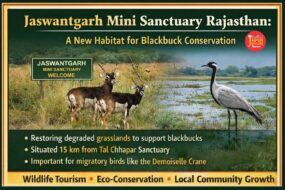
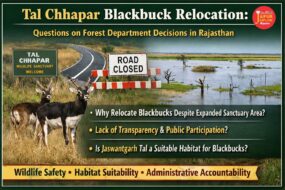
The success of Tal Chhapar is now influencing conservation strategies in other parts of Rajasthan and beyond. Plans are underway to replicate similar restoration efforts in degraded grasslands and even relocate surplus wildlife to newly restored habitats.
This replication is crucial because India has lost a significant portion of its natural grasslands over the decades. Scaling such models can help reverse this trend.
Challenges Ahead
While the success story is encouraging, several challenges remain:
- Policy gaps: Grasslands are still undervalued in national conservation policies
- Land-use pressure: Urbanization and agriculture continue to encroach on grasslands
- Lack of awareness: Public perception often prioritizes forests over grasslands
Addressing these challenges requires a shift in both policy and mindset.
A New Conservation Narrative
Grassland Restoration in India is redefining how conservation is approached. It highlights the importance of ecosystem-specific strategies rather than generalized solutions.
The revival of Tal Chhapar proves that degraded landscapes are not beyond recovery. With the right interventions, they can become thriving ecosystems once again.
More importantly, it emphasizes that conservation is not just about protecting what remains—it is about restoring what has been lost.
Final Thought
The story of Tal Chhapar is more than just a local success—it is a national lesson. It shows that Grassland Restoration in India can deliver measurable ecological, environmental, and social benefits.
As India faces growing environmental challenges, such models offer hope and direction. By recognizing the value of grasslands and investing in their restoration, the country can build a more resilient and biodiverse future.
The blueprint is clear. The opportunity is now.