Rajasthan Tourism Impact Middle East Tensions: Luxury Travel Hit as Palace on Wheels Sees Decline
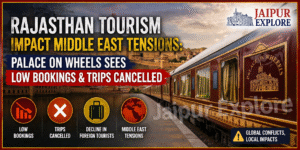
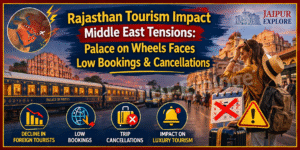
Rajasthan Tourism Impact Middle East Tensions has become a major concern as global geopolitical instability begins to affect one of India’s most iconic tourism sectors. The ripple effect of rising tensions in the Middle East is now visible in Rajasthan, where luxury tourism—especially the famous Palace on Wheels—is witnessing a sharp decline in bookings.
Reports indicate that multiple trips of the luxury train have been cancelled due to insufficient occupancy, highlighting how international conflicts can directly influence regional economies.
What Is the Palace on Wheels?
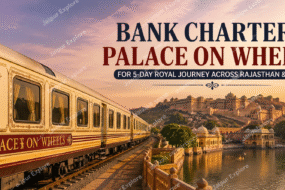
The Palace on Wheels is one of India’s most prestigious luxury trains, launched in 1982 to promote Rajasthan’s royal heritage and tourism.
- Covers destinations like Jaipur, Udaipur, Jaisalmer, and Agra
- Offers a 7-night, 8-day royal travel experience
- Known for luxury cabins, fine dining, and curated heritage tours
It primarily attracts high-end international tourists, making it highly sensitive to global travel trends.
Why Middle East Tensions Are Affecting Rajasthan Tourism
The Rajasthan Tourism Impact Middle East Tensions is largely due to a decline in international travel from key regions.
1. Drop in Foreign Tourists
Tourists from the Middle East form a significant portion of Rajasthan’s luxury tourism segment. With ongoing geopolitical tensions:
- Travel plans are being postponed or cancelled
- Safety concerns are discouraging long-distance travel
- International bookings have dropped sharply
2. Luxury Segment Hit the Hardest
Unlike budget tourism, luxury travel depends heavily on:
- Advance bookings
- Stable global conditions
- High-spending international visitors
As a result, premium services like the Palace on Wheels are facing the maximum impact.
Trip Cancellations and Low Occupancy
The situation has led to:
- Multiple cancellations of scheduled trips
- Low occupancy even on operational journeys
- Inability to meet minimum booking requirements
Reports suggest that the train requires a minimum number of cabins to be booked for each trip to operate, but current bookings are falling short of this threshold.
This has resulted in several journeys being cancelled altogether.
A Pattern of Repeated Disruptions
This is not the first time Rajasthan’s tourism has been affected by global conflicts.
- Previous disruptions occurred due to the Russia-Ukraine war
- The Israel-Hamas conflict also impacted bookings
- Now, Middle East tensions are continuing the trend
This pattern highlights how dependent luxury tourism is on global stability.
Economic Impact on Rajasthan
The Rajasthan Tourism Impact Middle East Tensions extends beyond just one train:
1. Revenue Loss
Luxury tourism contributes significantly to:
- State tourism revenue
- Employment in hospitality sectors
- Local businesses such as guides, hotels, and transport services
A drop in high-end tourists means a noticeable financial setback.
2. Impact on Local Economy
Cities like:
- Jaipur
- Jaisalmer
- Udaipur
rely heavily on tourism. Reduced tourist inflow affects:
- Hotel bookings
- Handicraft markets
- Tour operators
Changing Travel Trends
Interestingly, while international tourism is affected, some shifts are visible:
- Domestic tourism is showing resilience
- Destination weddings are shifting to Rajasthan from Gulf countries
This indicates that while one segment declines, others may partially compensate.
Challenges for Rajasthan Tourism
The current situation highlights several challenges:
1. Overdependence on Foreign Tourists
Luxury tourism relies heavily on international travelers, making it vulnerable to global crises.
2. Limited Diversification
A lack of diversified tourist sources increases risk during geopolitical instability.
3. High Operating Costs
Luxury services like the Palace on Wheels have high operational expenses, making cancellations more impactful.
What Can Be Done?
To minimize the Rajasthan Tourism Impact Middle East Tensions, authorities can consider:
1. Promoting Domestic Tourism
Encouraging Indian travelers to experience luxury tourism can reduce dependency on foreign markets.
2. Expanding Global Outreach
Targeting new markets in Europe, Southeast Asia, and North America.
3. Flexible Pricing and Packages
Offering discounts or customized packages to attract more bookings.
Future Outlook
Despite current challenges, Rajasthan’s tourism sector remains strong due to:
- Rich cultural heritage
- World-class hospitality
- Growing global interest in experiential travel
Once global conditions stabilize, the demand for luxury experiences like the Palace on Wheels is expected to recover.
Strategic planning
The Rajasthan Tourism Impact Middle East Tensions clearly demonstrates how global events can influence local economies. The decline in bookings and cancellation of trips for the Palace on Wheels reflects the vulnerability of luxury tourism to international instability.
However, with strategic planning, diversification, and promotion of domestic tourism, Rajasthan can navigate this phase and emerge stronger in the long run.