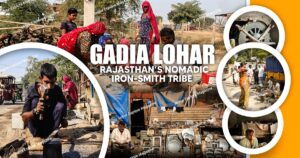
Gadia Lohar: Rajasthan’s Nomadic Iron-Smith Tribe
The Gadia Lohars are a distinctive community in Rajasthan known for their nomadic lifestyle and traditional metalworking skills. Their story is intertwined with history, culture, and changing times. This article explores who the Gadia Lohars are, their origins, their way of life, challenges they face, and their place in modern India.
Origins and Historical Roots
-
Name & Meaning: “Gadia” refers to the cart (“gaadi”) they travel in; “Lohar” means blacksmith. Together, Gadia Lohar indicates nomadic blacksmiths who move in carts.
-
Legend & Belief: Many Gadia Lohars believe their ancestors were associated with Maharana Pratap’s army. When Chittorgarh was captured by Akbar in 1568, tradition says the community swore an oath never to settle permanently until Mewar was free. Part of that vow involved giving up certain comforts: no permanent homes, no lights at night, no drawing water from wells, and rejecting regular material ties. Over centuries, that shaped their nomadic identity.
-
Region: Historically from the Mewar area (Udaipur, Chittorgarh), but now spread across various districts and states.
Lifestyle, Caste Identity & Culture
-
Nomadic Tradition: Traditionally, Gadia Lohars moved from place to place in bullock carts. They carried their tools, iron stock, and simple household items. Their way of life was rugged and self-sufficient.
-
Craft & Profession: Their primary work is making and repairing iron tools, weapons, utensils, and similar items. With time, as demand for traditional iron items lessens, many have adapted—some do welding, others take up side jobs, live in small settlements near towns or roads.
-
Cultural Symbols: The cart (“gaadi”) itself is symbolic. It embodies their freedom, past oath, and identity. Items hung on the cart often have ritual significance—small metal plates, strings, symbolic images tied to ancestor worship or deity figures (Devta) or spirits of ancestors (Pitrs).
-
Religious & Ritual Beliefs: Ancestor worship plays a part in their practices. Observances such as Shraddha (rituals for deceased ancestors) are respected. Some taboos or habits (about moving, settling, using wells etc.) come from old vows or beliefs.
Modern Transformation & Socio-Economic Status
-
Shifting Lifestyles: While many still identify as Gadia Lohar and preserve parts of the old lifestyle, many others have settled. Settlement is often informal—small huts, temporary homes, or rented dwellings.
-
Economic Challenges: Marginal income from metalwork, reduced demand for traditional ironware, competition from mass-produced goods, and lack of stable markets make sustaining livelihood difficult.
-
Social Integration: Historically on the fringes of society—both geographically (living on outskirts) and socially (limited access to certain services). As settlement increases, so do attempts to engage with education, healthcare, social welfare. But challenges persist: lack of infrastructure, discrimination, limited resources.
Key Features & Unique Traits
| Feature | Description |
|---|---|
| Nomadism | Travel by cart, minimal permanent habitation (in traditional form) |
| Tools & Craft | Blacksmithing, repairing iron goods, sometimes welding, producing iron utensils |
| Vow & Oaths | Cultural vows based in legend about not settling permanently, certain abstentions |
| Cultural Identity | Strong association with cart (gaadi), ancestor spirits (Pitrs), devotional practices |
Contemporary Issues & the Road Ahead
-
Preservation vs Adaptation: How much of the traditional lifestyle can continue in face of modern demands? Which practices are possible to keep, which need change?
-
Access to Services: Education, healthcare, clean water, sanitation—many Gadia Lohars need better access. Government schemes often miss nomadic or semi-nomadic communities.
-
Economic Empowerment: Training, market linkages, design modernization could help their metalwork gain broader demand. Certifications, help in branding (traditional + modern) could raise incomes.
-
Cultural Recognition: As their traditional practices fade, there’s risk of loss of folklore, rituals, oral history. Documentation, storytelling, arts projects can help.
The Gadia Lohar community embodies resilience. Their story is a blend of history, culture, struggle and adaptation. As India modernizes, the Gadia Lohars face a crossroad: retain the symbols and rituals that define them, while also embracing change to improve living standards. Recognizing their heritage, creating economic opportunities, and ensuring inclusion can help them navigate this path with dignity.