Iran Opens Strait of Hormuz During Ceasefire, India Evacuates 2,358 Citizens
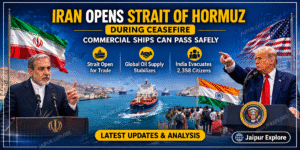
Iran Opens Strait of Hormuz during the ongoing ceasefire, marking a significant development in easing global trade tensions and stabilizing maritime routes in the Middle East. The announcement comes amid diplomatic efforts, military de-escalation, and growing international concern over regional security.
Iran Reopens Strait of Hormuz for Commercial Shipping
Iran has officially reopened the Strait of Hormuz during the ceasefire period, allowing all commercial vessels to pass safely through one of the world’s most critical oil transit routes.
Iran’s Foreign Minister Seyed Abbas Araghchi confirmed the decision via a post on X (formerly Twitter), stating that ships will be allowed to pass through a designated safe corridor managed by Iran’s Ports and Maritime Organization.
According to Iranian authorities, this move ensures:
- Safe passage for global commercial shipping
- Reduced risk to maritime trade
- Stability in international oil supply chains
The Strait of Hormuz is a vital chokepoint through which nearly a fifth of the world’s oil supply passes, making this decision highly significant for global markets.
Trump Welcomes the Decision
U.S. President Donald Trump publicly welcomed Iran’s move, expressing gratitude on his social media platform Truth Social.
Trump stated that he was pleased with the reopening of the Strait, calling it a positive step toward stability and peace in the region. His response highlights the importance of uninterrupted maritime trade for the global economy.
India Evacuates 2,358 Citizens from Iran
Amid rising tensions, Ministry of External Affairs India confirmed that India has successfully evacuated 2,358 citizens from Iran.
The evacuation process involved:
- Relocating citizens from Iran to Armenia and Azerbaijan
- Arranging safe transit routes
- Coordinating their return to India
This large-scale evacuation reflects India’s proactive approach to ensuring the safety of its citizens during international crises.
Trump Claims Iran Ready to Hand Over Enriched Uranium
In a major claim, Donald Trump stated that Iran is prepared to hand over its stockpile of enriched uranium to the United States as part of a potential agreement.
Enriched uranium is a critical component in nuclear weapons development, making this claim highly significant. Trump further added:
- The U.S. and Iran are close to a peace agreement
- Oil supply chains could normalize soon
- Regional stability may improve if the deal is finalized
However, Iranian media has dismissed Trump’s claims, calling them exaggerated and unrealistic.
Understanding Uranium Enrichment
Uranium is a versatile element used for both nuclear energy and nuclear weapons. The difference lies in the level of enrichment:
- Natural uranium contains a low percentage of usable material
- It is processed through centrifuges to increase purity
- This process is known as uranium enrichment
According to reports from the International Atomic Energy Agency:
- Iran possesses around 5–6 tons of enriched uranium
- About 120–130 kg is enriched up to 60%
- Weapons-grade uranium requires approximately 90% enrichment
This is why the United States and Israel have consistently pressured Iran to limit its nuclear program.
Israel-Lebanon Ceasefire: Key Developments
A 10-day ceasefire between Israel and Lebanon has been implemented following U.S. mediation. The goal is to create space for long-term peace negotiations.
Key Conditions of the Ceasefire:
- Israel retains the right to self-defense
- No offensive operations by Israel on Lebanon via land, air, or sea
- Lebanon is expected to restrain Hezbollah from launching attacks
- Diplomatic talks to continue during the ceasefire
Despite these measures, the situation remains fragile, with both sides maintaining a cautious stance.
Recent 24-Hour Updates
Here are the five major developments from the past 24 hours:
1. Ceasefire Agreement Finalized
Israel and Lebanon agreed to a 10-day ceasefire under U.S. initiative, aiming to pave the way for a permanent peace agreement.
2. Ceasefire Terms Announced
The U.S. clarified that Israel can act in self-defense but will halt offensive actions, while Lebanon faces pressure to control Hezbollah activities.
3. Iran-U.S. Negotiations Continue
Trump indicated that negotiations with Iran are close to concluding, with potential talks possibly taking place in Pakistan.
4. U.S. Military Preparedness
U.S. forces in the Middle East remain on high alert, ready for combat if diplomatic efforts fail.
5. U.S. House Rejects War-Limiting Proposal
The U.S. House of Representatives rejected a proposal to block military action against Iran by a narrow margin of 213–214 votes, giving the administration more flexibility.
Global Impact of the Strait of Hormuz Reopening
The reopening of the Strait of Hormuz has immediate global implications:
- Stabilization of oil prices
- Improved investor confidence
- Resumption of normal shipping routes
- Reduced geopolitical risk in energy markets
This move is seen as a positive signal amid ongoing tensions and uncertainty.
Conclusion
The development where Iran Opens Strait of Hormuz during the ceasefire is a crucial step toward reducing tensions in the Middle East. Combined with India’s evacuation efforts and ongoing diplomatic negotiations, the situation reflects a complex mix of conflict and cooperation.
While the ceasefire and reopening of trade routes offer temporary relief, long-term stability will depend on successful negotiations, especially regarding Iran’s nuclear program and regional security dynamics.
The coming days will be critical in determining whether diplomacy prevails or tensions escalate once again.