Akshaya Tritiya: How Were Child Marriages Prevented in Rajasthan?
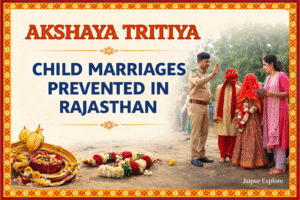
Akshaya Tritiya — a festival considered highly auspicious for weddings — has once again come under the spotlight in Rajasthan. This year, however, the narrative has taken a positive turn. Instead of witnessing a surge in underage marriages, the state recorded multiple successful interventions where planned child marriages were stopped in time.
Why Akshaya Tritiya Raises Concern
Akshaya Tritiya is widely regarded as a शुभ मुहूर्त where marriages can be conducted without elaborate rituals. Because of this belief, many families choose the day for weddings.
Unfortunately, in some regions, this tradition has been misused to arrange marriages involving minors. Over the years, this has made Akshaya Tritiya a high-alert period for child protection authorities and social organizations.
Timely Action Prevents Child Marriages
This year, several districts across Rajasthan witnessed swift action that helped prevent numerous child marriages. NGOs working at the grassroots level identified suspicious cases and immediately informed local authorities.
District administrations responded quickly by reaching the locations, verifying the age of the individuals involved, and stopping the ceremonies before they could take place.
The success of these interventions was made possible through:
- Early detection of planned marriages
- Strong coordination between NGOs and officials
- Rapid response teams at the district level
- Active involvement of local governance bodies
Role of NGOs During Akshaya Tritiya
Non-governmental organizations played a crucial role during Akshaya Tritiya by keeping a close watch on vulnerable areas. Their field teams worked directly with communities, gathering information and spreading awareness.
In many cases, NGOs also counselled families, explaining the legal and social consequences of child marriage. This approach not only stopped immediate cases but also helped change mindsets.
Administrative Vigilance and Legal Action
Authorities across Rajasthan remained on high alert during Akshaya Tritiya. Police officials, child welfare committees, and district officers worked together to ensure strict enforcement of laws.
Where necessary, minors were shifted to safe environments to protect them from being forced into marriage. Families involved were warned about legal consequences under the Prohibition of Child Marriage Act, 2006.
Local officials were also reminded of their responsibility to prevent such incidents, reinforcing accountability at the grassroots level.
Growing Awareness Making a Difference
Compared to previous years, there has been a noticeable improvement in awareness. More people are now willing to report cases of child marriage, especially during Akshaya Tritiya.
Awareness campaigns have helped educate communities about:
- The legal age of marriage
- Health risks associated with early marriage
- The importance of education
- Legal penalties for violations
This gradual shift in thinking is playing a key role in reducing such practices.
Challenges That Still Need Attention
Despite these successes, challenges remain. In some areas, child marriage is still influenced by:
- Traditional beliefs
- Financial pressures
- Lack of education
- Social acceptance
Efforts to eliminate child marriage must therefore go beyond enforcement and focus on long-term social change.
Government Efforts and Future Steps
The Rajasthan government continues to take steps to address the issue, especially during sensitive occasions like Akshaya Tritiya. Special monitoring systems, awareness drives, and coordination with NGOs are helping strengthen prevention mechanisms.
Helplines and digital reporting tools are also making it easier for citizens to report suspected cases quickly.
This year’s Akshaya Tritiya in Rajasthan stands as an example of how timely action and collective responsibility can make a difference. The prevention of multiple child marriages reflects stronger enforcement and increasing awareness.
While the progress is encouraging, continuous efforts are essential to ensure that every child is protected and given the chance to build a better future.