Rajasthan Tigress Gives Birth to 2 Cubs: What Happened at Jaipur Biological Park?
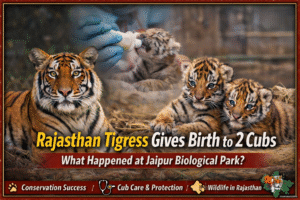
Rajasthan Tigress Gives Birth to 2 Cubs has become a major highlight in wildlife conservation news, bringing fresh hope for tiger population growth in the state. In a significant development, a tigress at Nahargarh Biological Park in Jaipur has given birth to two cubs, marking an important milestone for conservation efforts and wildlife management in Rajasthan.
This rare and encouraging event not only adds to the tiger population but also reflects the effectiveness of ongoing conservation programs in the state.
A New Beginning: Birth of Two Tiger Cubs
According to officials, the tigress delivered two cubs on April 18, 2026, at Nahargarh Biological Park. The birth is being celebrated as a positive step towards wildlife conservation, especially for the endangered Bengal tiger species.
Forest officials confirmed that both cubs were initially healthy, but required immediate attention due to a lack of maternal care in the early hours.
Reports suggest that the tigress did not feed the cubs soon after birth, which led authorities to intervene quickly.
Why Were the Cubs Separated from the Mother?
One of the most critical aspects of this story is the temporary separation of the cubs from their mother.
- The tigress did not feed the newborn cubs initially
- Veterinary experts advised immediate intervention
- Cubs were shifted to a neonatal care unit
This decision was taken to ensure their survival. Experts conducted health assessments and started feeding the cubs under controlled conditions.
Such situations are not uncommon in captivity, where first-time mothers or stressed tigresses may fail to provide immediate care.
Intensive Care: Inside the Neonatal Unit
After separation, the cubs were placed in a special neonatal care facility within the park.
Here’s what the care process involves:
- Round-the-clock monitoring by veterinary experts
- Controlled feeding schedules
- Temperature-regulated environment
- Continuous health assessment
Authorities have deployed staff in shifts to ensure 24/7 supervision, highlighting the seriousness of the effort to save the cubs.
This level of care significantly increases the survival chances of newborn tiger cubs in captivity.
Importance of This Birth for Wildlife Conservation
The news of Rajasthan Tigress Gives Birth to 2 Cubs is not just a routine update—it carries deeper ecological significance.
1. Boost to Tiger Population
India is home to the largest population of Bengal tigers, and every successful birth contributes to strengthening the species.
2. Strengthening Captive Breeding Programs
Biological parks like Nahargarh play a crucial role in:
- Protecting endangered species
- Supporting breeding programs
- Educating the public about wildlife
3. Conservation Awareness
Such events attract attention and awareness toward wildlife protection, encouraging more people to support conservation efforts.
Challenges in Raising Tiger Cubs
While the birth is a positive sign, raising tiger cubs—especially in captivity—comes with several challenges:
Lack of Maternal Care
As seen in this case, cubs sometimes need human intervention for survival.
Health Risks
Newborn cubs are extremely vulnerable to:
- Infections
- Malnutrition
- Environmental stress
Behavioral Development
Cubs raised in controlled environments may face challenges if reintroduced into the wild.
Role of Rajasthan in Tiger Conservation
Rajasthan has emerged as a key state in tiger conservation efforts. From reserves like Sariska to facilities like Nahargarh Biological Park, multiple initiatives are underway to protect and increase tiger populations.
The state forest department plays a vital role in:
- Habitat protection
- Anti-poaching operations
- Scientific wildlife management
These efforts are crucial in ensuring long-term survival of tigers in India.
What Happens Next for the Cubs?
The future of the cubs depends on their health and development in the coming weeks.
Short-Term Care
- Continued monitoring in neonatal unit
- Gradual strengthening through controlled feeding
Possible Reintroduction to Mother
If conditions improve, experts may attempt to reunite the cubs with the tigress.
Long-Term Plan
Depending on their growth and behavior, the cubs may:
- Stay within the biological park
- Become part of conservation breeding programs
Public Interest and Tourism Impact
Events like Rajasthan Tigress Gives Birth to 2 Cubs also have a positive impact on eco-tourism.
Wildlife enthusiasts and tourists are often drawn to such developments, which helps:
- Boost local tourism
- Generate revenue for conservation
- Increase public engagement with wildlife
However, authorities ensure that the cubs remain protected from excessive human interaction during their early stages.
A Symbol of Hope for Wildlife
The birth of two cubs at Jaipur Biological Park symbolizes hope, resilience, and the success of conservation efforts. Despite initial challenges, the quick response by veterinary teams showcases the commitment of authorities toward wildlife protection.
This event reminds us that conservation is not just about protecting animals in the wild, but also about ensuring their survival in controlled environments when necessary.
Rajasthan Tigress Gives Birth to 2 Cubs is more than just a headline—it is a story of survival, scientific intervention, and conservation success. From emergency neonatal care to round-the-clock monitoring, every step taken reflects the dedication of wildlife authorities.
As the cubs continue to grow under expert supervision, their journey will be closely watched—not just by officials, but by wildlife lovers across the country.
If nurtured successfully, these cubs could become a vital part of India’s ongoing mission to preserve its majestic tiger population.